


Material Guide for Durable Indoor Furniture
Choosing materials for your furniture is about more than appearance. It’s about how you live, how long the piece should be part of your home, and how it ages over time. In this material guide, we go through the most common materials for indoor furniture so that you can make a choice you feel confident about—both for your home and for the environment.
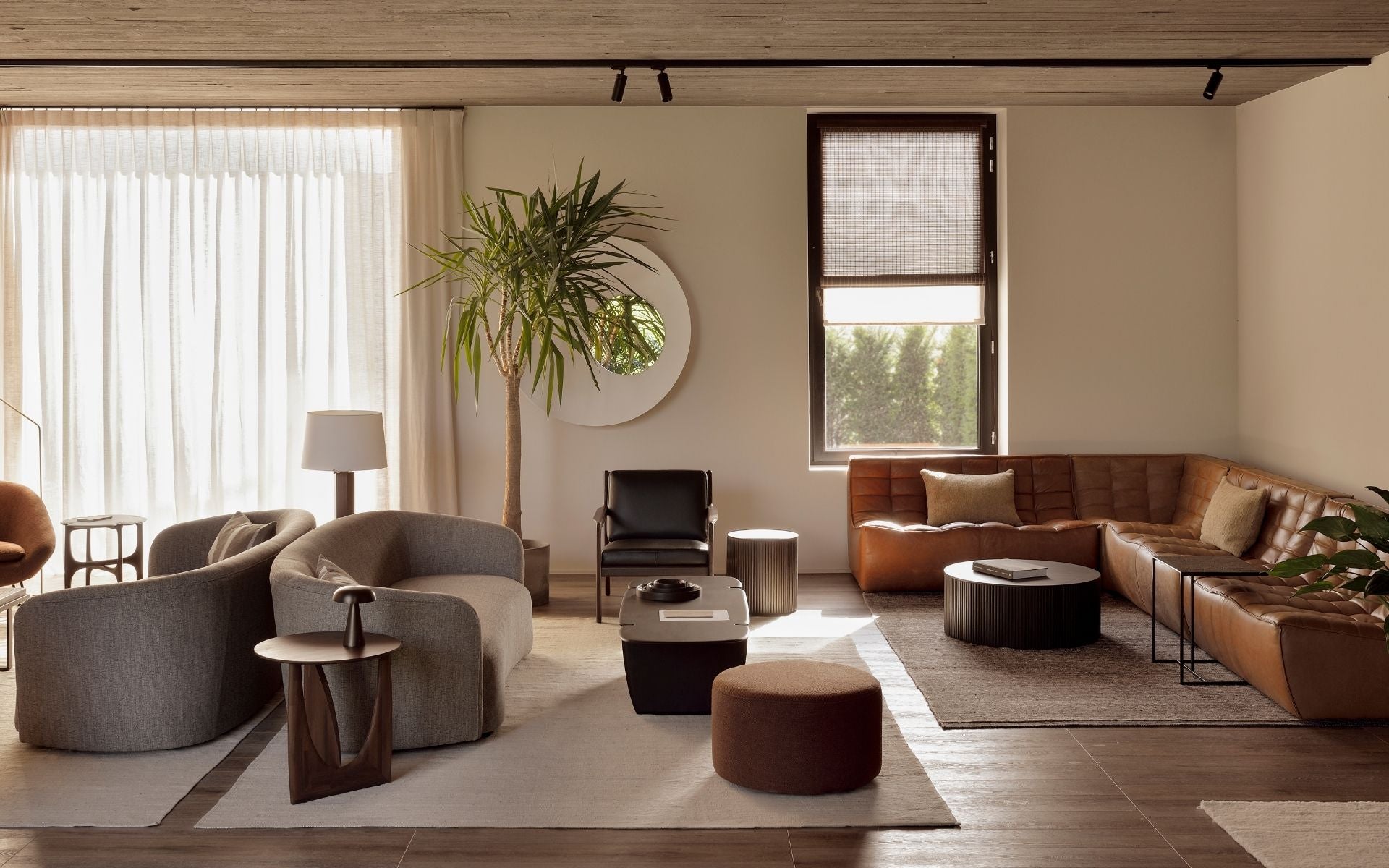
SOLID WOOD
There’s a reason solid wood has been the first choice in furniture craftsmanship for hundreds of years. The material lives, breathes, and develops a more beautiful character over time. Every piece of solid wood furniture is unique because no grain pattern is ever the same.
Solid wood means that the entire construction is made from real wooden planks—not thin layers glued onto another material. This makes the furniture highly durable in a way that’s hard to match. Got scratches or marks? Sand and oil it again, and it will look like new. This is exactly the kind of durability that allows a wooden piece to be passed down through generations.
Common wood types in Scandinavian indoor furniture include oak, birch, beech, and ash. Oak is hard and durable with a distinct, warm grain. Birch offers a lighter, cleaner look. Beech is a tough choice often used for chairs and dining tables.
Danish Skovby is a great example of what can be achieved with solid wood. They produce tables, chairs, and storage furniture entirely in Denmark with a focus on quality and long lifespan.
Suitable for you if: you want furniture that lasts a lifetime and only becomes more beautiful with age.
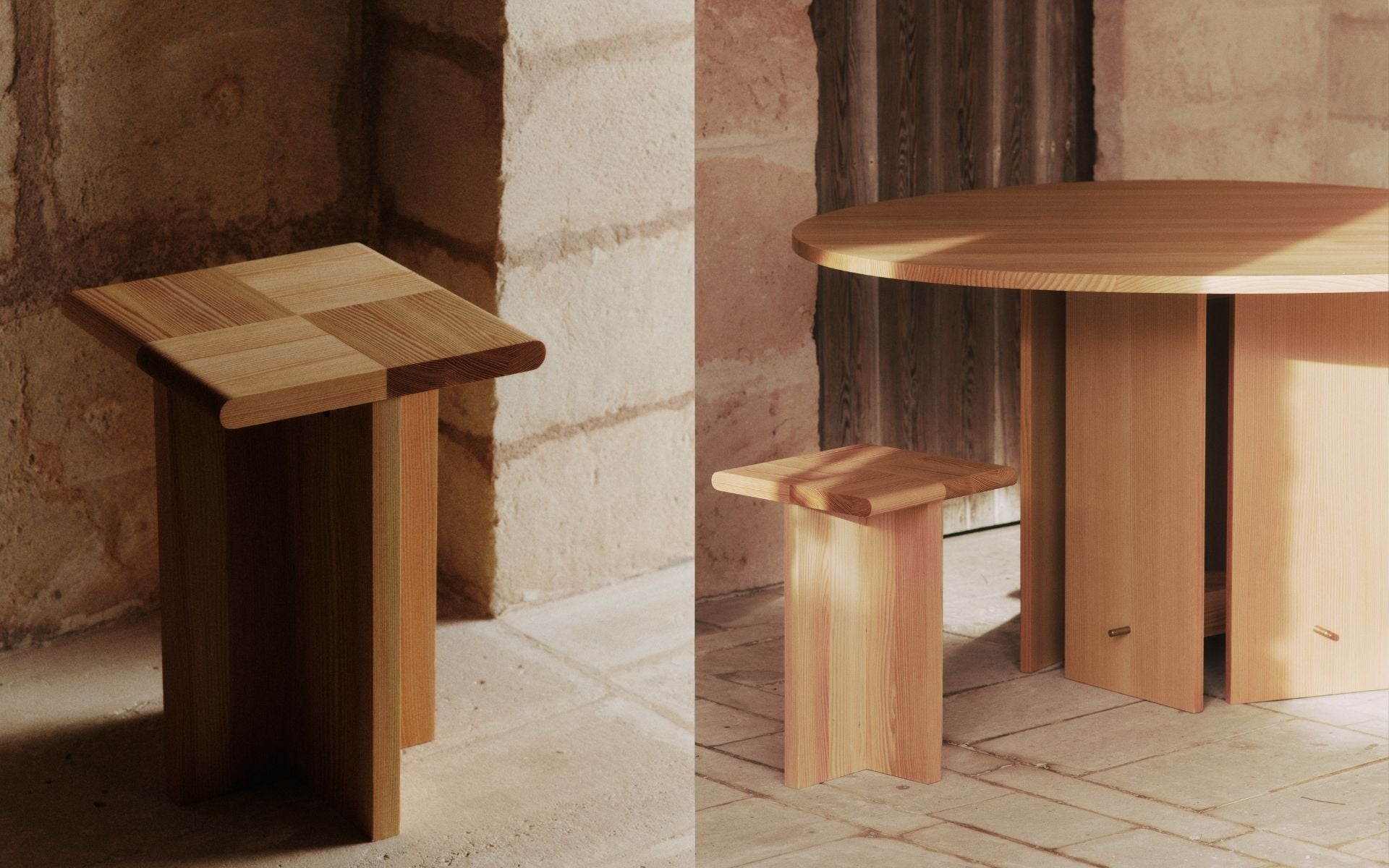
On the image: The Sala Piece side table and Aukko dining table from Ferm Living.
VENEER AND MDF
Veneer consists of thin layers of real wood that are glued onto a core, usually made of MDF or particleboard. This gives the surface the same natural appearance as solid wood, but at a different price point.
MDF, which stands for Medium Density Fibreboard, is a composite material made of wood fibers and binders. It is easy to shape, smooth, and works excellently in furniture where large, flat surfaces are needed—such as cabinet fronts and shelving.
It’s important to know that veneered furniture cannot be sanded and refinished in the same way as solid wood. If the surface gets deeper damage, it can be difficult to repair. On the other hand, veneer is more dimensionally stable and less likely to warp with changes in humidity. This makes it a practical choice for storage solutions, for example.
Suitable for you if: you want a wood look in a stable and affordable form.
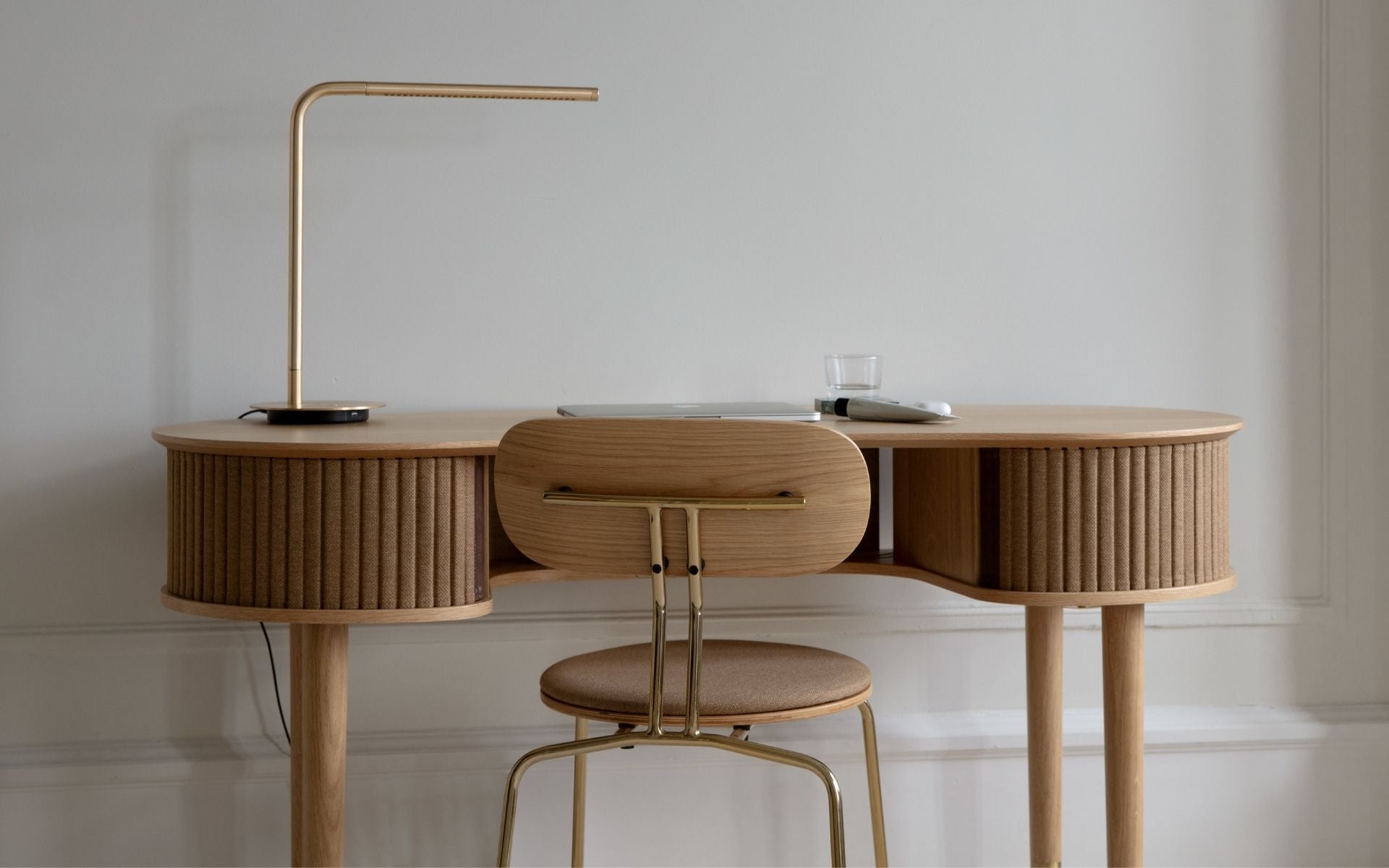
On the image: The Audacious desk and the Curious chair from Umage.
MARBLE AND STONE
Few materials signal elegance as clearly as marble. A marble tabletop instantly becomes a focal point, whether placed in the living room or hallway. Stone is incredibly durable and has a unique surface where no two pieces look the same.
Marble is a natural material formed over millions of years, giving each slab its own character with distinct veining and color variation. What makes marble special is also what requires a bit of extra care: the surface is porous and can absorb acids and liquids. Think coasters under glasses and quick clean-up of spills to preserve its beauty.
An interesting development is that many manufacturers now create marble furniture suitable for both indoor and outdoor use. This allows you to create a cohesive look between your living room and outdoor space.
Suitable for you if: you want a piece that makes a statement and are willing to give it a little extra care.
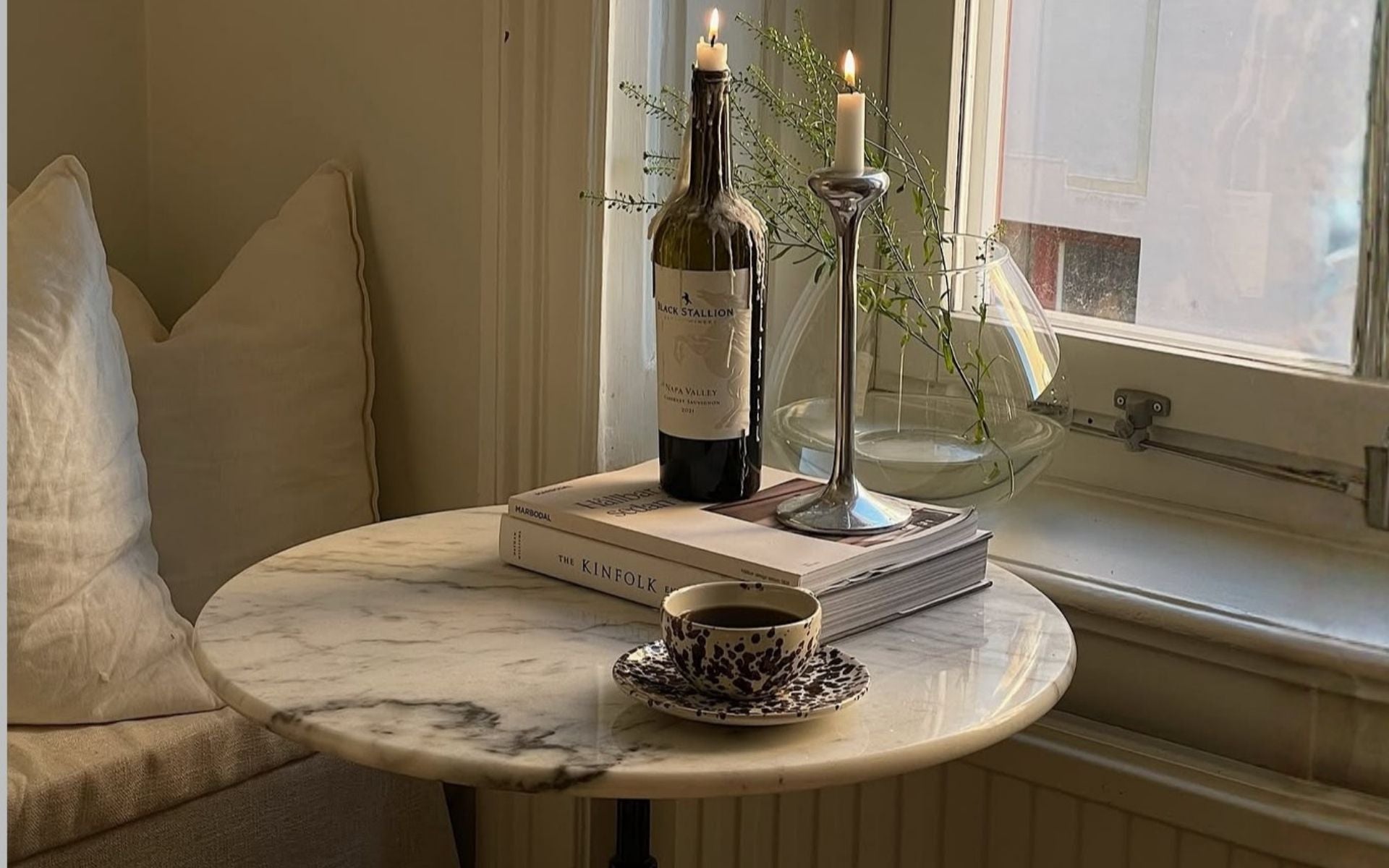
On the image: The Loire garden table from Brafab.
RATTAN AND NATURAL FIBERS
Rattan is one of the oldest furniture materials we know, and it has made a strong comeback in modern interiors. It is lightweight, flexible, and brings an organic warmth that is difficult to achieve with other materials.
A rattan piece is craftsmanship. Each strand is handwoven around a frame, meaning no two pieces are exactly alike. Rattan works perfectly as an accent piece—a chair by a desk, an armchair in the corner, or a decorative element in a bookshelf.
Sika Design specializes in rattan furniture and has over a hundred years of craftsmanship tradition. Their pieces show how timeless the material can be when handled with knowledge and respect.
Suitable for you if: you want to add texture and character and appreciate handcrafted furniture.
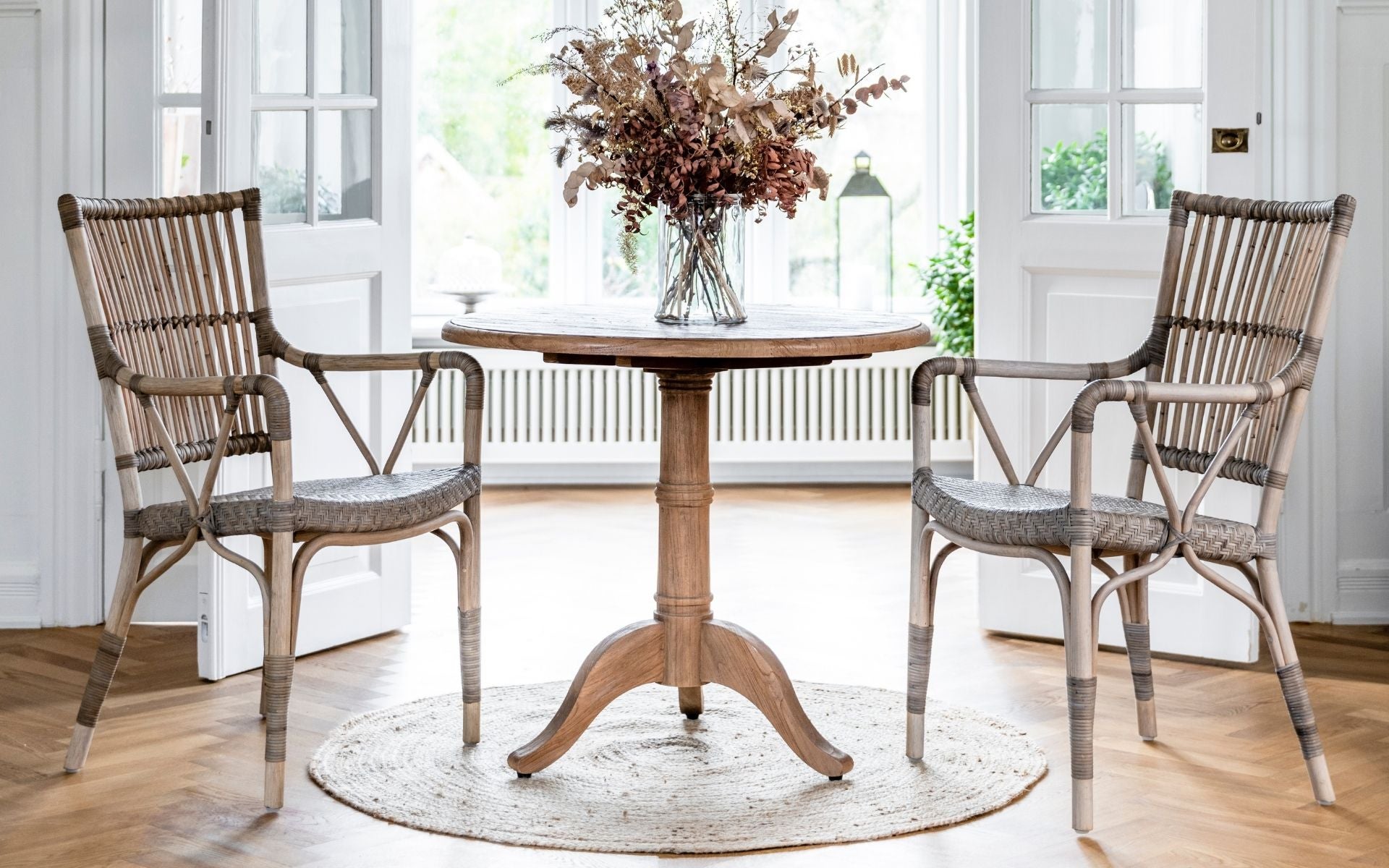
On the image: The Piano dining chair from Sika Design.
LEATHER
Well-crafted leather may be the most personal material you can choose. It adapts to you, softens where you sit, and develops a patina that tells its own story. Leather furniture is an investment that rewards you over time—not the other way around.
High-quality leather, such as full-grain or aniline leather, retains its natural surface with all its unique markings. This means no two leather pieces look exactly the same. Pigmented leather has a more even surface and is more resistant to stains, making it a better option for families with children.
Want your leather to last? Avoid direct sunlight, wipe up spills immediately, and treat it with leather balm once or twice a year. With proper care, a leather sofa or armchair can last for decades.
Artwood is known for its leather furniture with classic character. Their armchairs in vintage cigar leather have that timeless quality that never goes out of style.
Suitable for you if: you’re looking for a piece with personality that improves over time.
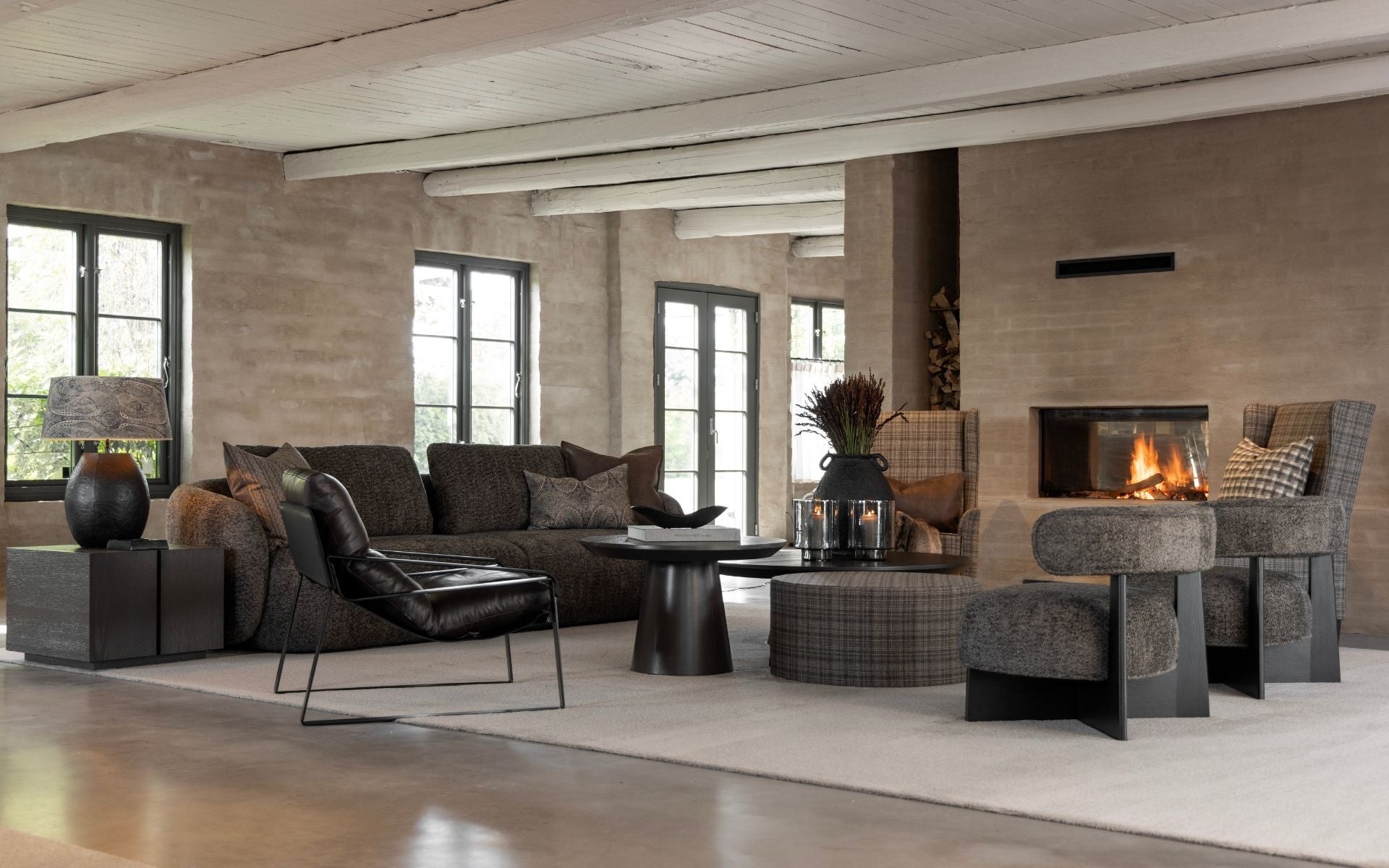
On the image: The Hilldale armchair from Artwood.
TEXTILES AND UPHOLSTERY
Textiles give furniture softness, color, and personality. Through your choice of fabric, you can easily set the mood of a room—from soft and cozy to sleek and modern.
Common upholstery materials include cotton, linen, polyester, and blends of these. Natural materials like linen and cotton breathe better and feel more exclusive, but can be more sensitive to stains. Synthetic blends are often more durable and easier to clean, which can be crucial in homes with children or pets.
A growing trend is removable covers that can be washed or replaced. This significantly extends the lifespan of the furniture and allows you to change the look without replacing the entire piece.
Ethnicraft is a brand that shows how textiles can make furniture both practical and beautiful. Their N701 sofa has a relaxed, generous shape where the fabric takes center stage.
Suitable for you if: you want to influence the feel of a room and value flexibility.
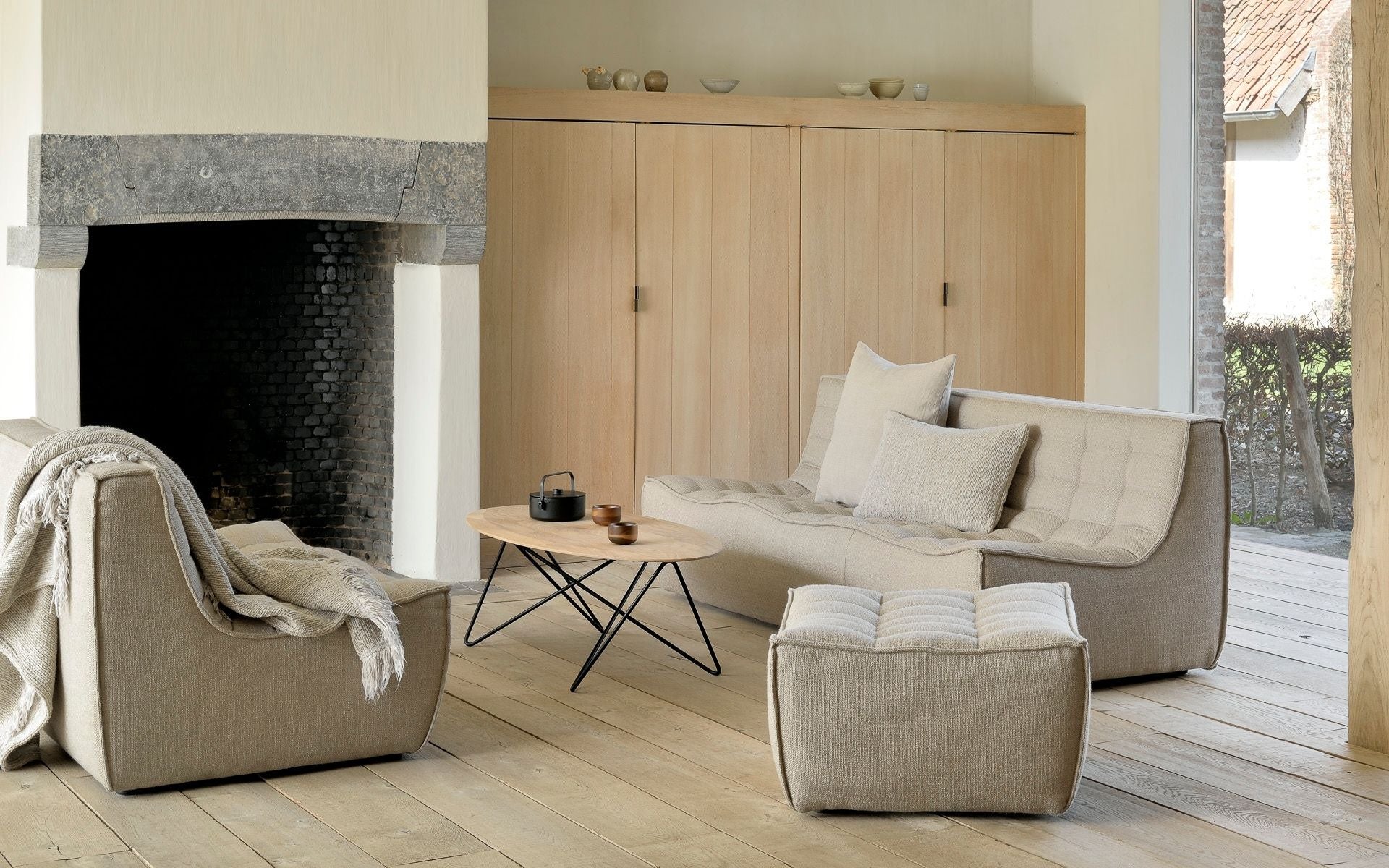
On the image: The N701 sofa, N701 armchair, and N701 ottoman from Ethnicraft.
HOW TO CHOOSE THE RIGHT MATERIAL FOR YOUR INDOOR FURNITURE
Choosing materials isn’t about finding the “best” one—it’s about finding what fits your life. Ask yourself these questions:
How is the furniture used?
A dining table used daily by a family with children needs to withstand more than a side table in the hallway. Solid wood and stone are especially durable, while textiles and veneer may suit calmer areas better.
How long do you want to keep it?
Are you thinking in terms of a lifetime or until your next move? Solid wood, marble, and quality leather reward a long-term perspective. Veneer and MDF can be the right choice if you value flexibility.
What feeling do you want to create?
The material sets the tone of the room. Wood brings warmth, marble adds elegance, rattan creates organic character, and textiles provide softness.
How much maintenance are you willing to do?
Marble and leather require regular care. MDF and polyester textiles are easier to maintain. Solid wood sits somewhere in between.

COMMON QUESTIONS ABOUT MATERIALS FOR INDOOR FURNITURE
Which material lasts the longest?
Solid wood and stone have the longest lifespan among indoor furniture materials. A solid oak table or marble surface can last for generations with proper care. Leather comes close—especially full-grain leather, which ages with character rather than wearing out.
Is veneer worse than solid wood?
Not necessarily. Veneer has different advantages, such as better dimensional stability and lower cost. The key difference is that veneer cannot be refinished in the same way. For storage and less exposed furniture, veneer works very well.
How do I know if a piece is made of solid wood?
Look at the grain. Solid wood has natural variation and is never perfectly symmetrical. Veneer often has a more uniform surface. Weight can also be a clue—solid furniture is generally heavier.
Which materials are most environmentally friendly?
Solid wood from sustainably managed forests, preferably FSC-certified, is one of the most eco-friendly options. Rattan and natural fibers are renewable materials with a low environmental footprint. The most important factor is choosing furniture you’ll keep for a long time, regardless of material.
Can marble be used for dining tables?
Yes, but it requires some extra care. Marble is porous and can be damaged by acids from citrus or wine. Use coasters and wipe spills quickly. Many people choose marble for coffee tables and side tables where the risk of food stains is lower.
How do I care for wooden furniture?
Wipe with a slightly damp cloth and avoid standing moisture. Treat the surface with oil or wax once or twice a year, depending on wear. Avoid placing wooden furniture in direct sunlight for long periods, as it can fade the surface.