


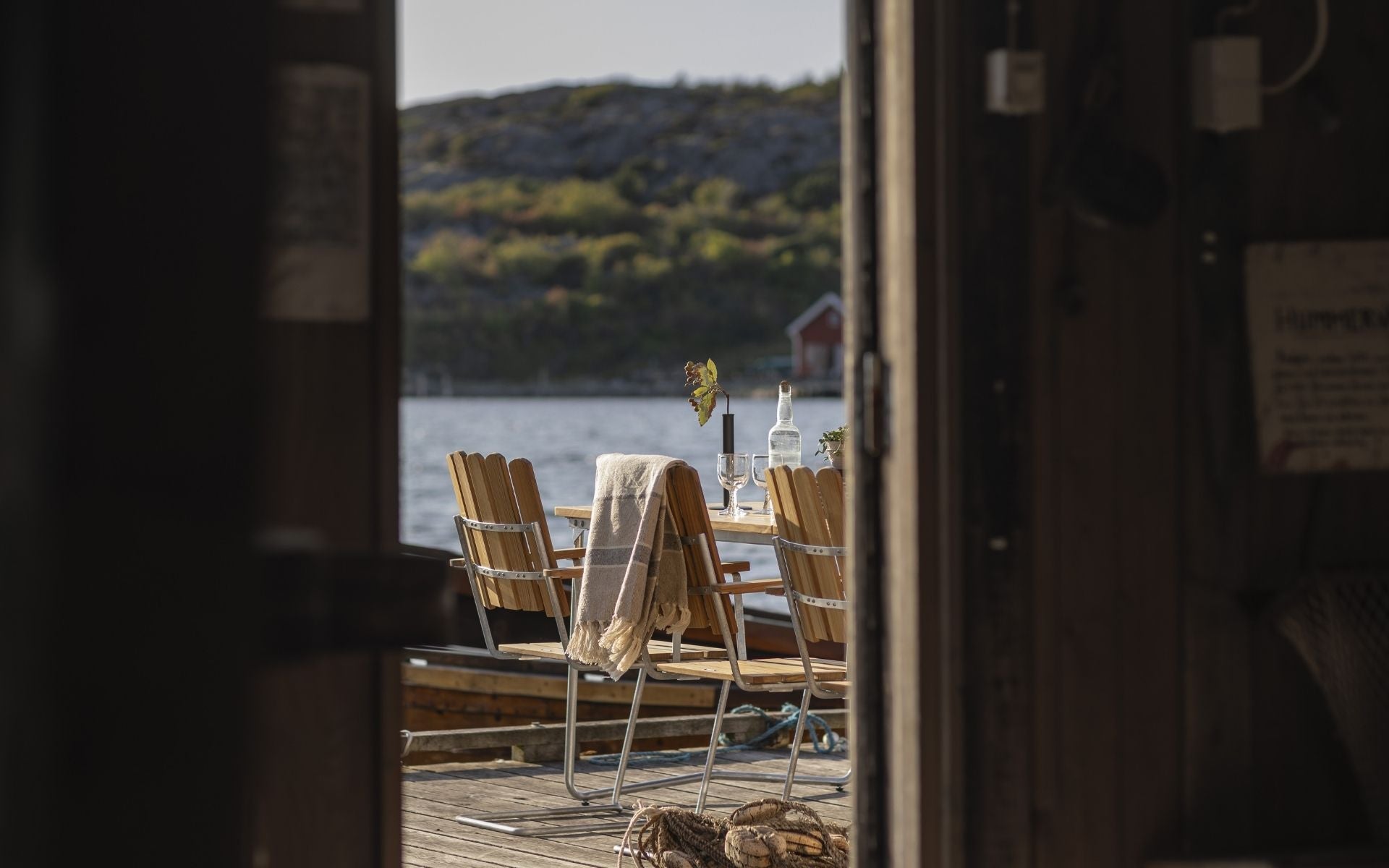
Investing in good outdoor furniture is not always easy, perhaps even more difficult in our Nordic climate, where temperatures change quickly. It is damp, wet, and cold during autumn, frosty in winter, and a mix of sun and rain in summer.
Large variations in weather and temperature also place higher demands on material choices. Furniture can easily crack, rust, or fade after just a few years. However, with the right choice of materials and good quality, your furniture can last for decades with minimal maintenance.
Below, we go through different types of materials and what to consider, followed by five useful tips for Nordic conditions.
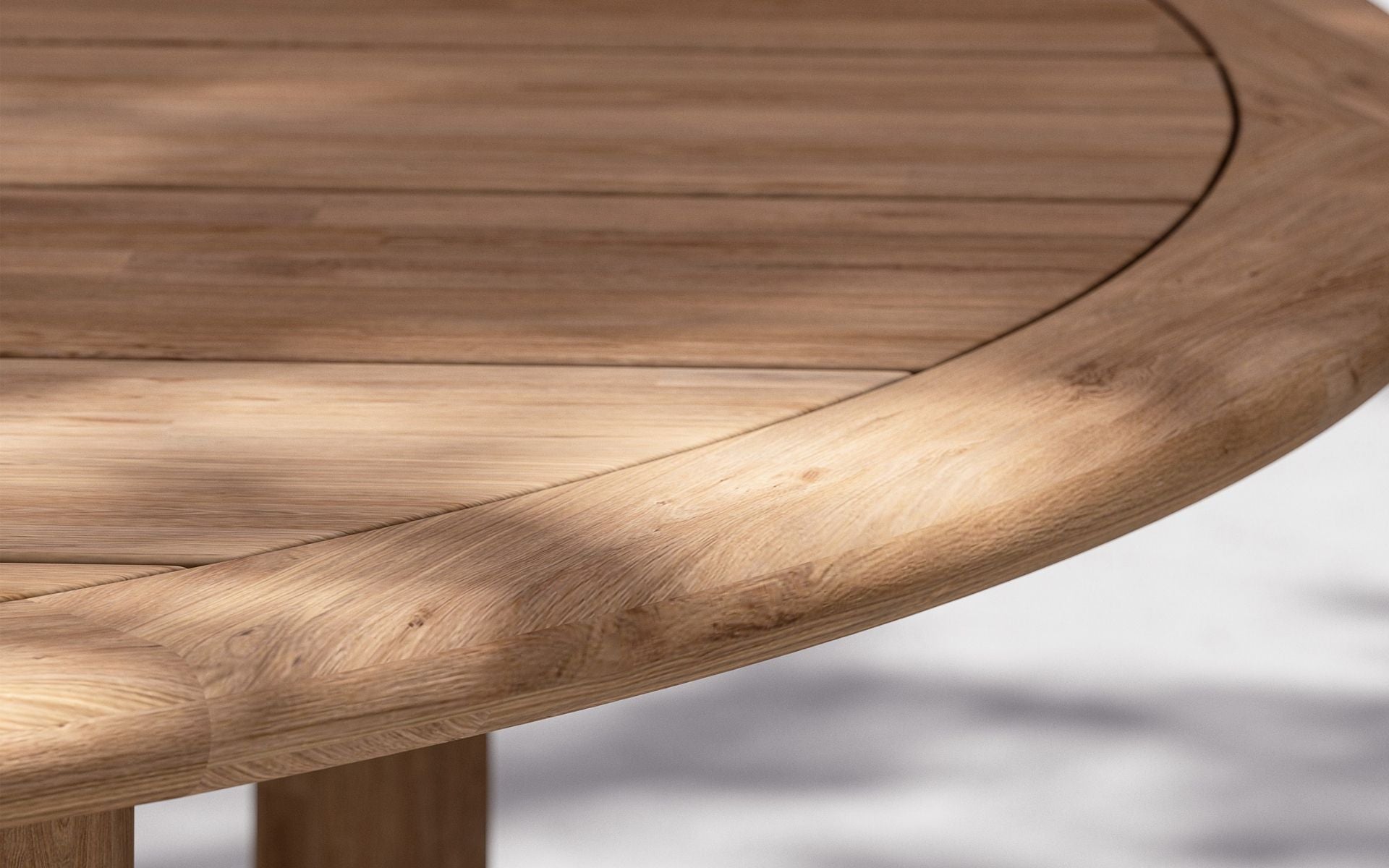
Wood – Classic but Requires Care
Wood is the most timeless material for outdoor furniture and fits well in most Nordic gardens and environments. It provides a warm and inviting feel and comes in many styles and variations. However, there are many types of wood, each with different properties, advantages, and disadvantages.
Teak is the most durable option. Teak wood has a natural oil content that allows it to withstand moisture and frost without cracking or rotting. If left untreated, teak will gradually turn gray and develop a beautiful patina that many people appreciate. If you want to maintain its warm brown color, it needs to be treated with teak oil regularly. Teak’s excellent qualities also come with some drawbacks—it is often more expensive, and the wood usually comes from distant countries. Choose teak carefully, invest in quality, and ensure it is FSC-certified.
Oak and Acacia are also durable options for Nordic climates. These are relatively hard woods. If left untreated, they require regular oiling, but with proper care, they perform well in Nordic conditions.
Pine and Spruce are softer and usually more affordable. These require a lot of maintenance. Without regular treatment with oil or wood stain, they can rot when exposed to moisture. Painted pine and spruce furniture are somewhat more durable, but overall, they are best suited for covered outdoor areas.
Tip for wooden furniture: Oil or varnish before winter and store under cover or protect with a furniture cover to extend lifespan.
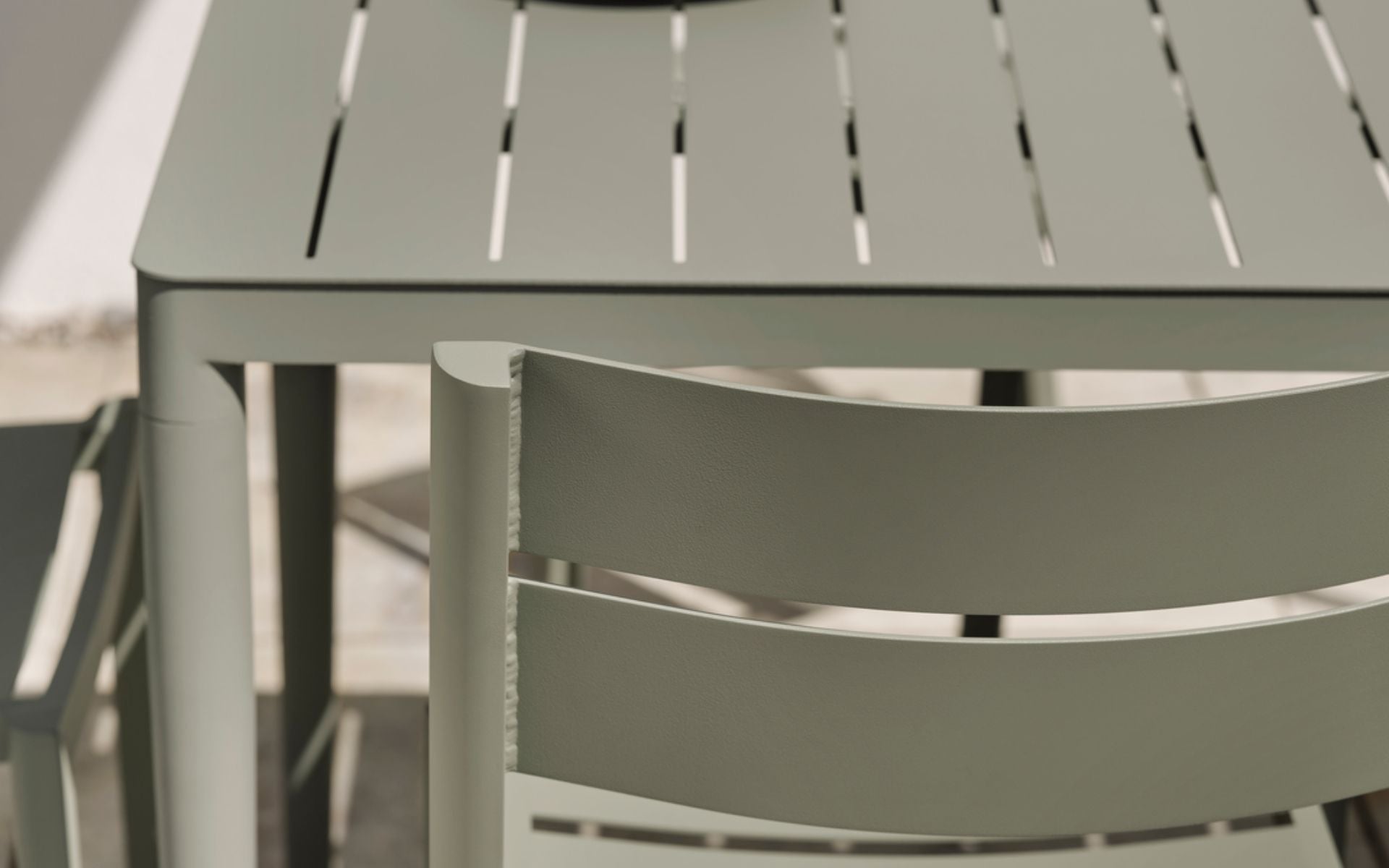
Aluminium – Maintenance-Free and Lightweight
Aluminium has become a popular material for outdoor furniture in the Nordic region—and for good reason. It does not rust, is easy to move and carry, withstands moisture and frost, and requires minimal maintenance.
Many aluminium outdoor furniture pieces are powder-coated, giving them a more exclusive look and a wide range of colors. Aluminium furniture comes in many variations, and quality matters here as well. Thinner materials are more prone to dents, and thin coatings are more sensitive to impacts.
Tip for aluminium furniture: Since it is lightweight, it can be more affected by wind and weather. It can also feel cold and hard to sit on, so cushions are recommended for better comfort.
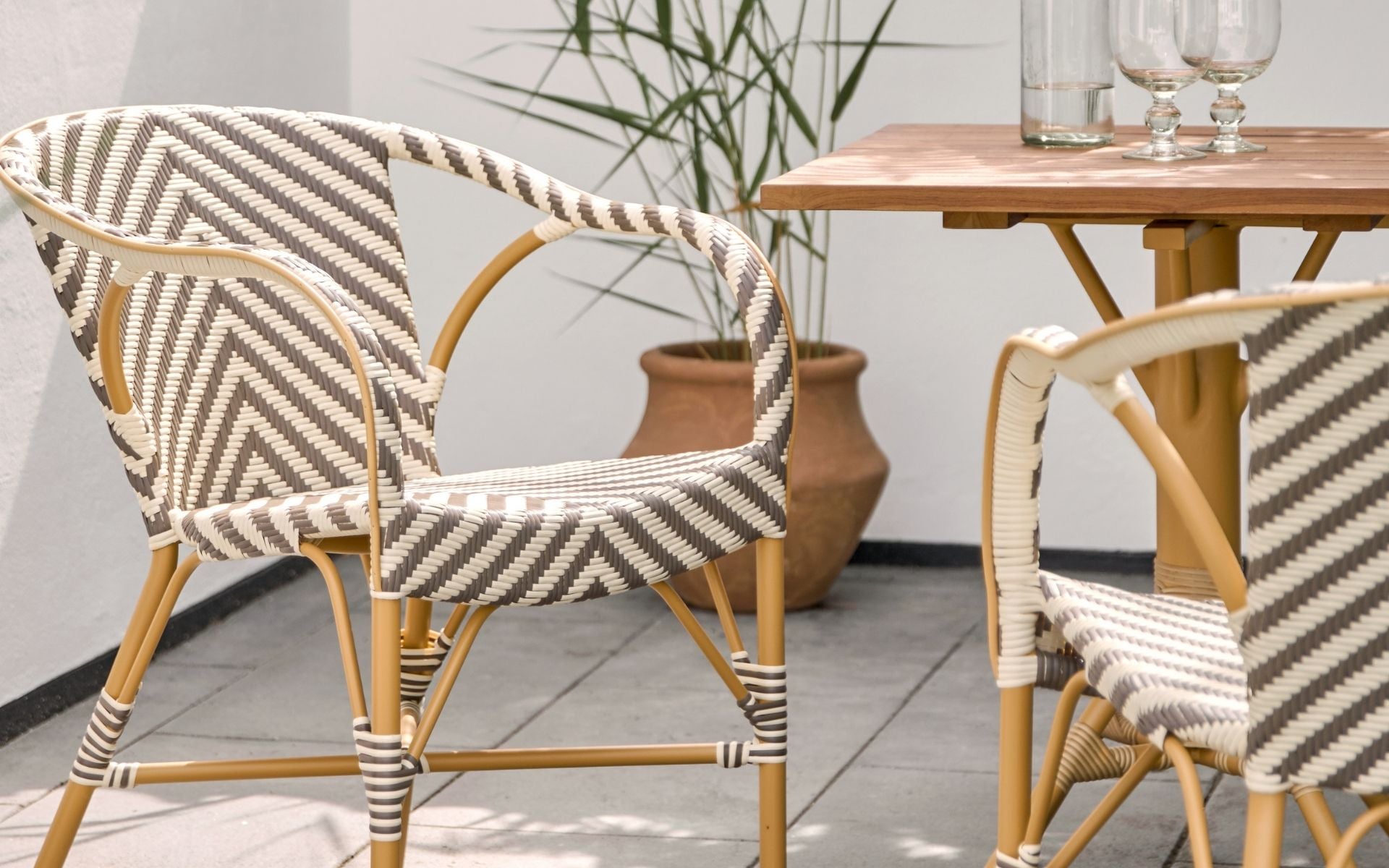
Synthetic Rattan – Stylish and Durable
This material goes by many names: synthetic rattan, PE rattan, or artificial rattan. It is a plastic-based material designed to mimic natural rattan. It handles rain, moisture, sun, and frost very well, is easy to clean, and requires no maintenance—making it an excellent choice for Nordic conditions. In contrast, natural rattan does not tolerate moisture and is best suited for covered areas or indoor/outdoor spaces.
The quality of synthetic rattan varies.
Tip for synthetic rattan furniture: Cheaper versions are often UV-sensitive and may become brittle after a few years. Choose higher quality with thicker fibers and better weaving.
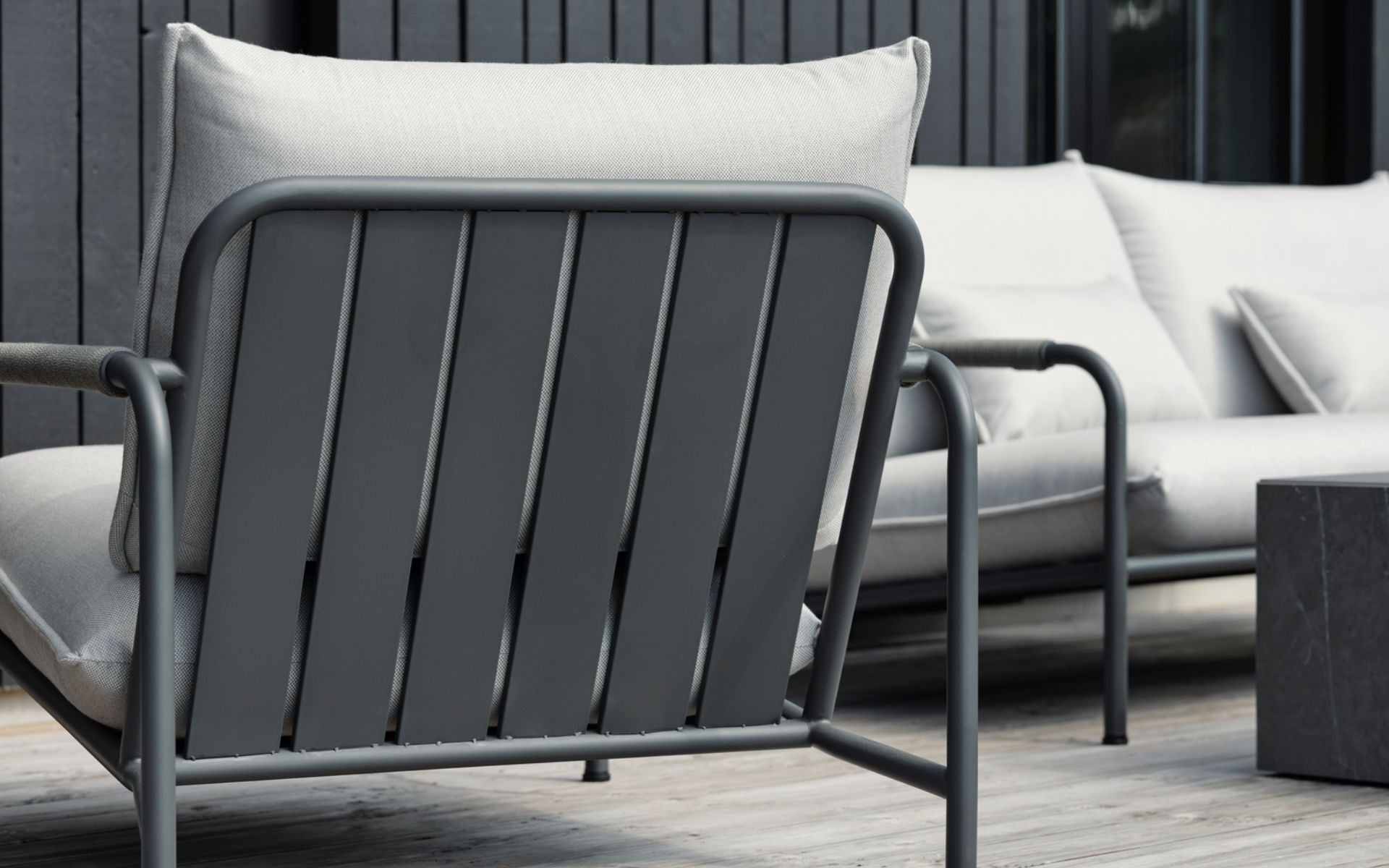
Stainless Steel and Iron – Heavy and Durable
Solid wrought iron is very durable and visually appealing but heavy and requires regular treatment in Nordic climates. Without proper rust protection, it can rust in joints and screws.
Stainless steel is a better option for outdoor use near the sea or in humid environments. It is corrosion-resistant and requires little maintenance, but it is both heavy and expensive.
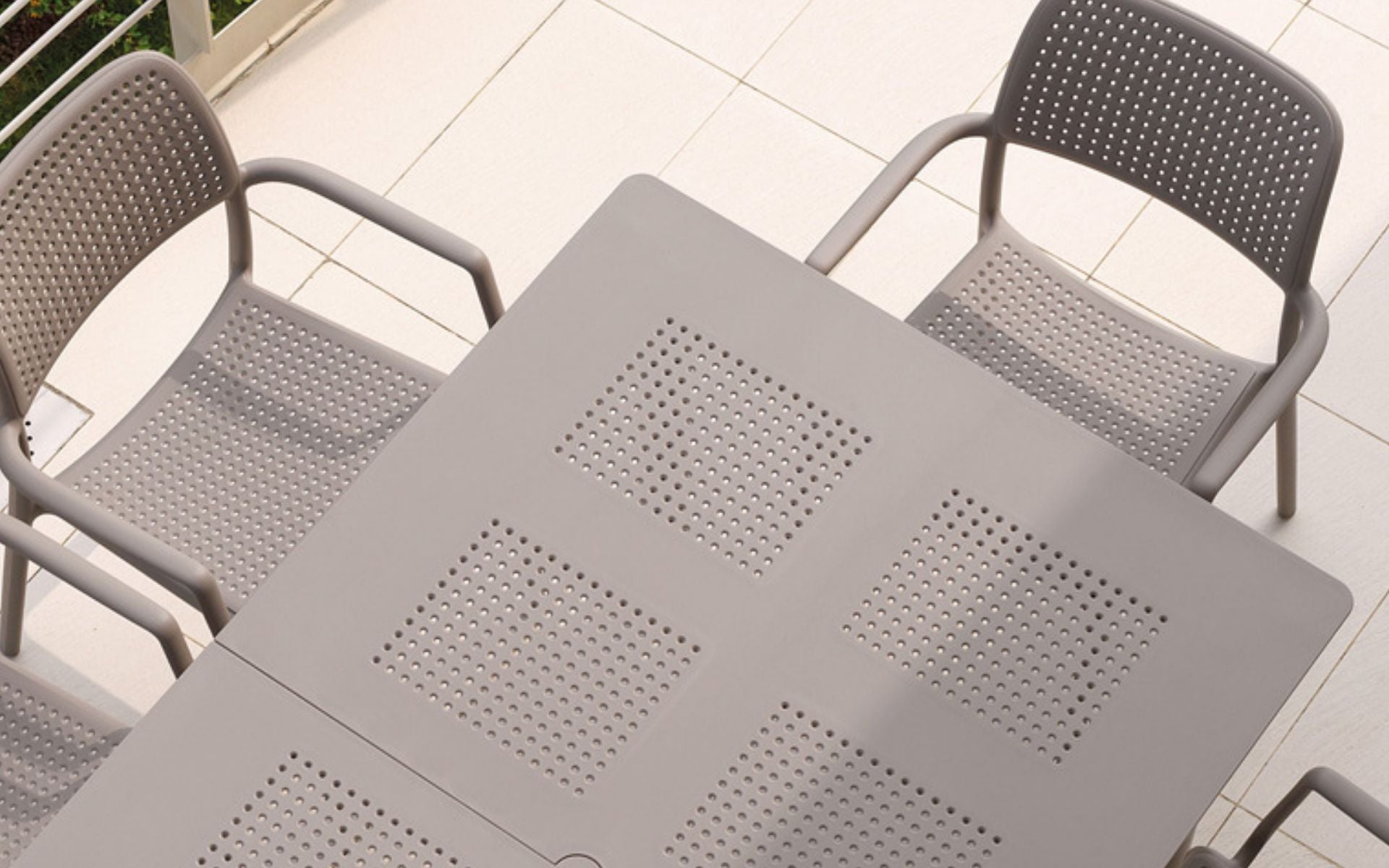
Plastic and Recycled Plastic – Environmentally Friendly and Durable
Outdoor furniture made from recycled plastic is becoming increasingly popular. This is partly because it is extremely durable, requires virtually no maintenance, and performs very well in Nordic conditions. We offer furniture from brands such as Nardi, an Italian company known for high-quality molded plastic furniture. The material is resistant to both sun and moisture.
Tip for plastic furniture: Choose furniture made from recycled plastic, especially HDPE (high-density polyethylene), which is of high quality. Lower-quality plastic often becomes brittle in cold weather and fades in the sun. Avoid cheap plastic alternatives in Nordic conditions—for durability and environmental reasons.
5 Tips for Furniture in Nordic Conditions
1. Store furniture indoors or protect it with a cover during winter. Even the most durable furniture will last longer if kept in a protected space or covered during the coldest and wettest months.
2. Invest in quality! Well-made furniture in the right material can last 10–20 years with simple care, while cheaper furniture may need replacing after just one or two seasons.
3. Choose the right feet depending on the surface. Furniture with rubber feet or adjustable legs handles moisture better and avoids direct contact with wet ground.
4. Consider the surface your furniture stands on. On wooden decking, for example, water can accumulate and cause moisture damage. Choose furniture that allows airflow or position it to avoid prolonged contact with damp surfaces.
5. Cushions are a category of their own. Choose water-resistant, quick-drying, high-quality cushions. They retain both shape and color longer. Store them indoors or in a cushion box when not in use.