
Start with the room
Before you fall in love with a sofa, measure your room. A rule of thumb is that the sofa shouldn’t take up more than two-thirds of the room’s width, and there should be at least 45 cm of free space around it. This is to prevent the sofa from ‘swallowing up’ the room. Also bear in mind doors, stairs and lifts – how will the sofa get in?
Large room: Here you have the freedom to choose a spacious corner sofa or a wide 3–4-seater sofa. Remember that a sofa that’s too small can make a large room seem empty and impersonal. Feel free to complement it with a footstool or an armchair to create a natural seating arrangement. You might also want to add a large rug to tie the sofa arrangement together and create a clearer sense of unity in the room.
Small room: Choose a sofa with narrow armrests and high legs – this creates a more airy impression. A two-seater or a compact three-seater can work wonders. Avoid deep models with a low seat, as they tend to dominate a small room visually. Opt for a sleeker sofa with a simpler design.
Choose the right size and shape
2-seater – perfect for a small flat, a home office or as a complement to a larger sofa.
2.5-seater – a standard sofa size that fits into most homes.
3-seater – the obvious choice for most homes. Suitable for cosy everyday moments as well as dinner parties.
4-seater – a slightly larger sofa that requires space in the room. But if you have the space and are a large family, this is a good choice.
Divan/corner sofa – provides maximum seating space and defines the room. Remember to decide whether you want a divan on the right or left – and whether there’s actually room for it.
Modular sofa – flexible and future-proof. You can rearrange it as needed, move sections to another room or add more modules. Perfect for a growing family or if you like to change and refresh the room. For those who are particularly playful, you can mix both materials and colours.
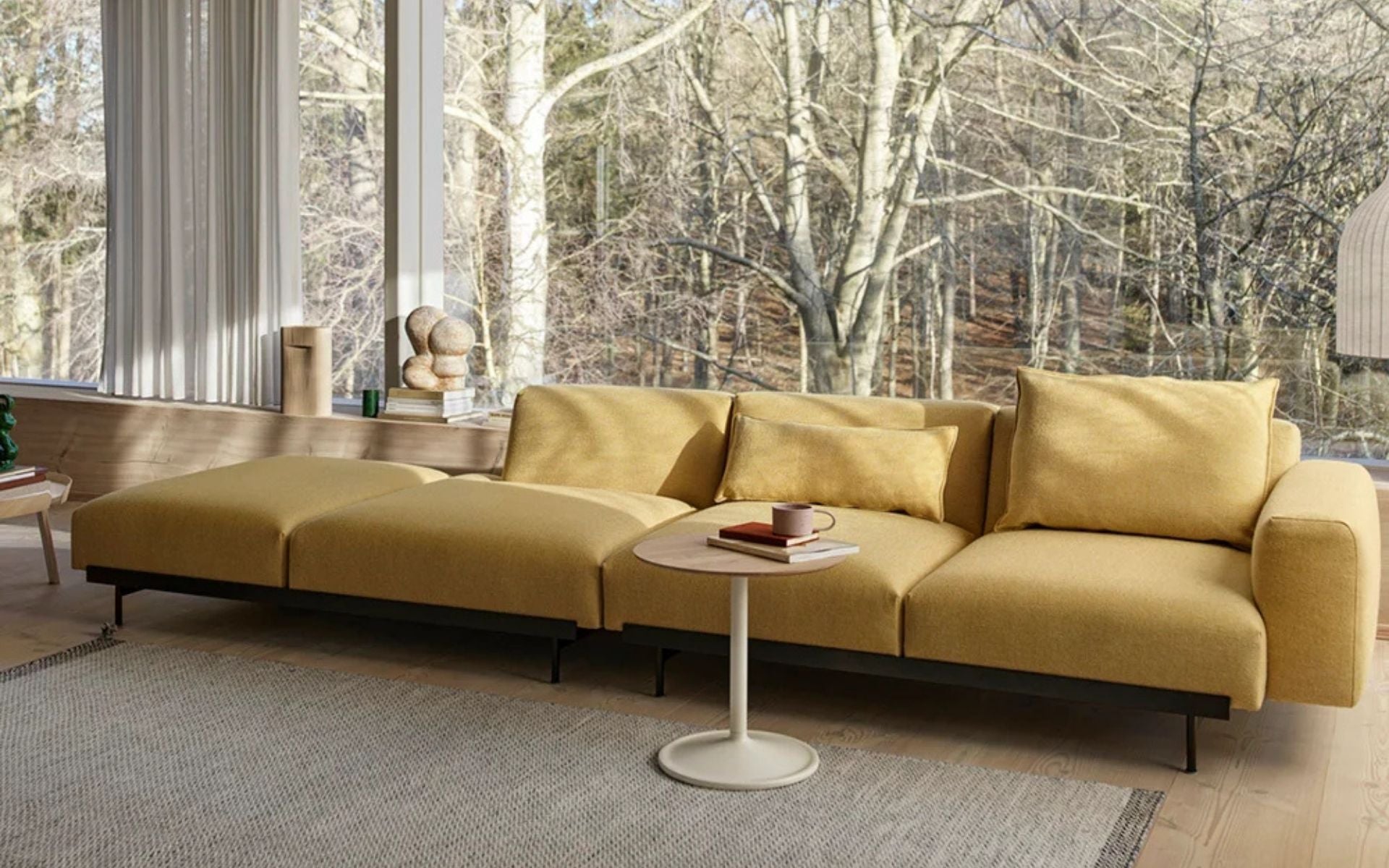
Pictured: In Situ Modular Sofa – Muuto
Seat depth and seating comfort
The seat depth determines how you actually sit. A deep seat (over 90 cm) gives a relaxed, almost reclining feel – lovely for film nights, but can be impractical if you’re sitting upright and working. A shallower depth (around 80 cm) is more comfortable when sitting with a straight back and makes it easier to stand up. Here, your height is the deciding factor. Whether you’re young or old, you should be able to sit down on and stand up from the sofa easily, as well as sit and lie down comfortably.
Always try out the sofa before you buy it. Sit down, stand up, lean back. A sofa should feel just right for you.
Choose the right material
Fabric – soft, warm and cosy. Available in countless colours and textures. Choose a treated fabric or a good-quality fabric if you have children or pets.
Leather and faux leather – easy to keep clean and age with style. Genuine leather becomes softer over the years and takes on more character the more it is used.
Velour and bouclé – very popular right now, and for good reason. They give a luxurious impression and are surprisingly hard-wearing. They do require a little more care when cleaning.
Colour and style
The sofa is often the focal point of the room – choose a colour you’ll be happy with for a long time to come. Neutral shades such as grey, beige and off-white are timeless and easy to style around. Fancy a colourful look? Go for an accent colour and keep the rest of the furniture in muted tones. Or choose a neutral sofa and have fun with decorative cushions and throws. These are easy to swap out, depending on the season or your mood.
Also consider the style: Scandinavian simplicity, classic elegance or a more relaxed living room – choose a sofa that suits the rest of your décor, but one that you can also grow with.
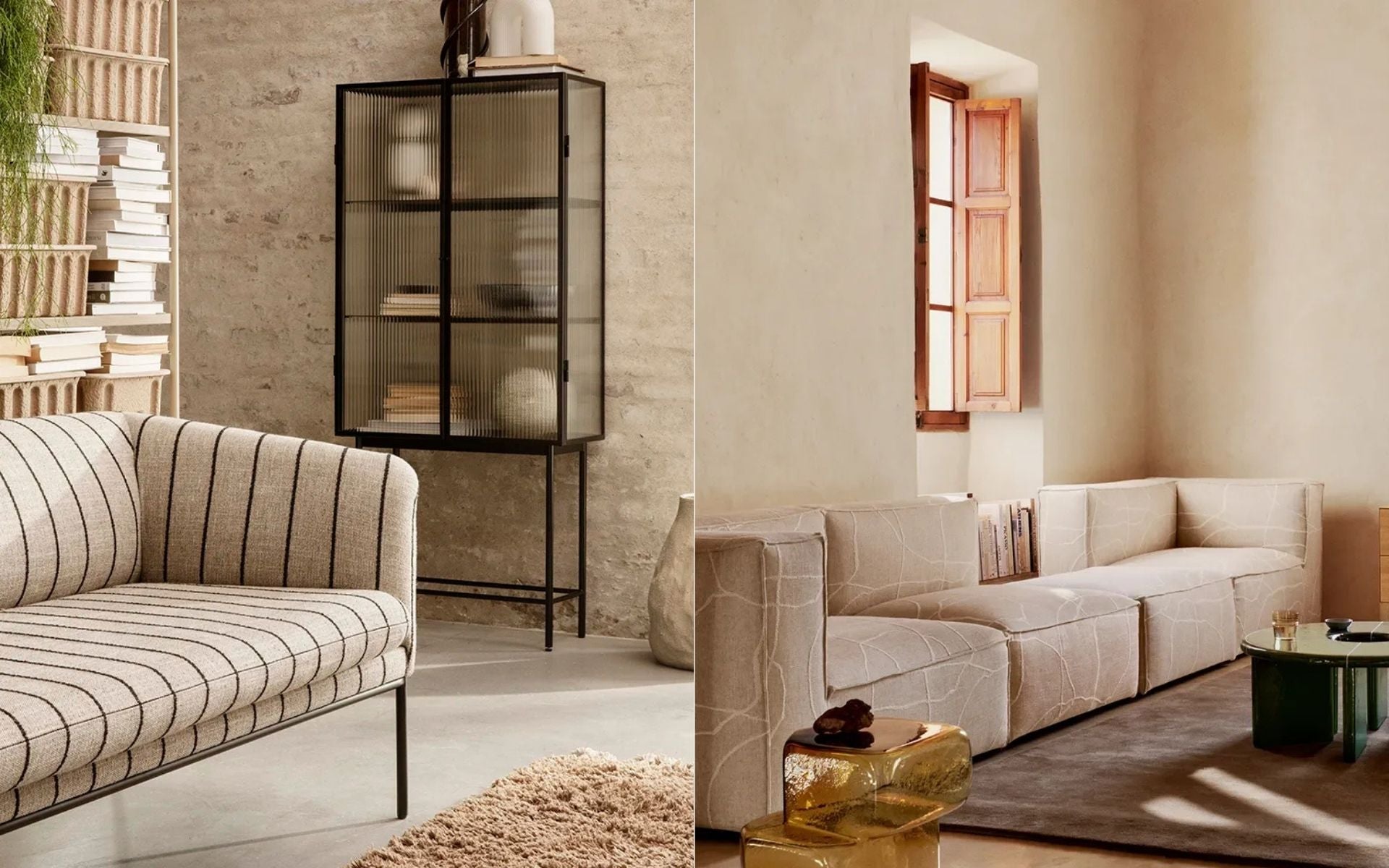
In the picture: on the left Ferm Living 2-seater Turn Pasadena, on the right Ferm Living Catena
Practical questions to ask yourself
- How many people are usually at home?
- Do guests sleep on the sofa? (Choose one with a sleeping function.)
- Are there children or pets in the home? (Choose a hard-wearing material.)
- How long should the sofa last? (Invest in quality – a good sofa will last 10–20 years.)
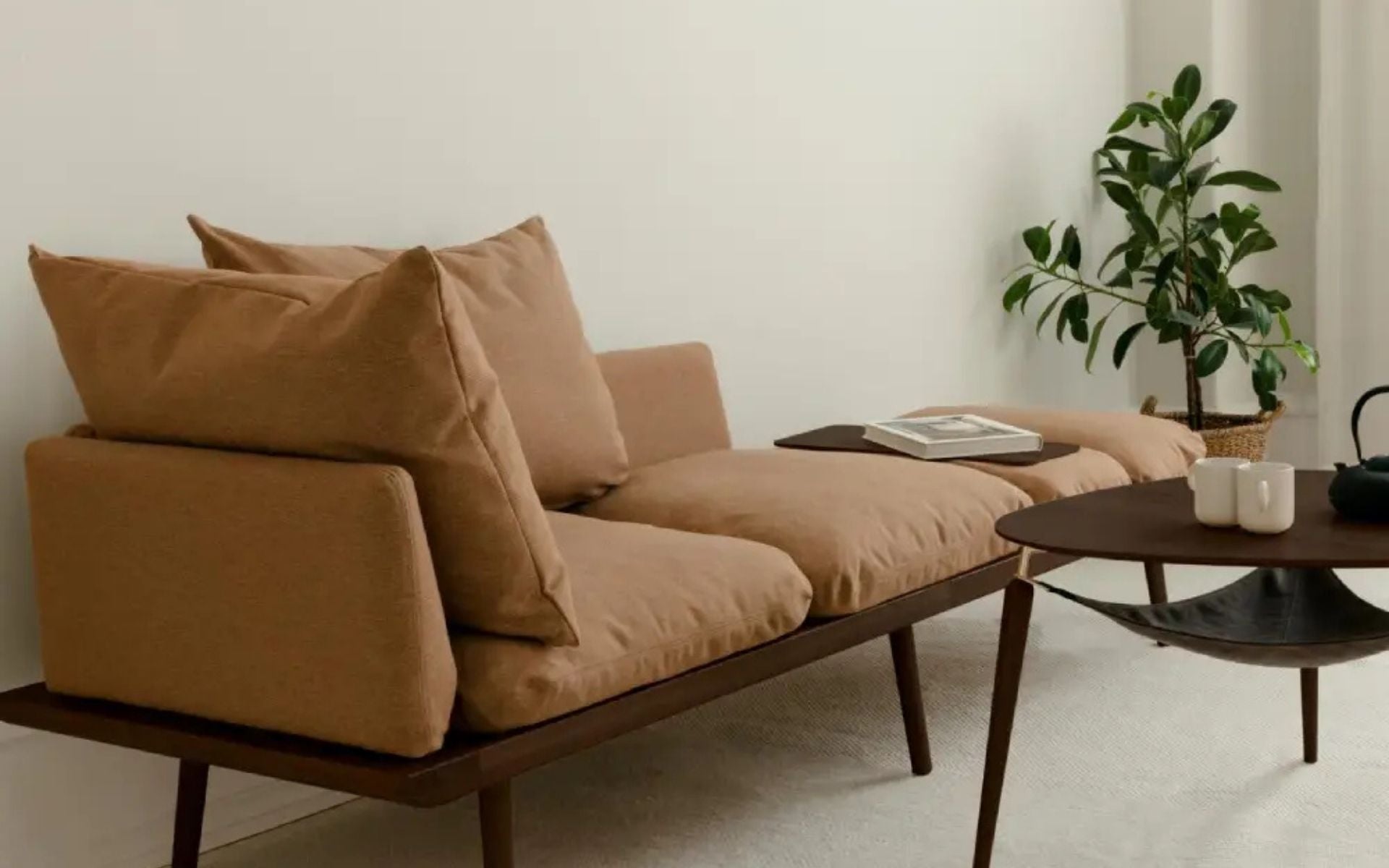
Pictured: Japanese-style Umages Lounge Around
Hultén’s tips
Measure three times, buy once. A sofa is usually a large piece of furniture that’s worth investing in. If you opt for quality, you’ll get a sofa that’s just as attractive and comfortable to sit on, year after year. Bring your tape measure, floor plan and, if possible, a photo of the room with you when you visit us. Our interior design advisers will help you find the right one – whether you have a small kitchen-diner or a large open-plan space.
Are you looking for:
Classic sofas – see our sofas from Furninova
Slightly larger, sturdy sofas – see our sofas from Artwood