
Outdoor furniture: how to choose for your patio
Your patio is an extra room in the warmer months. It is where you have dinner, drink your morning coffee and sit together when the evening stretches on. This guide shows you how to work out what your patio needs, which material suits it, and how to make your furniture last for many seasons.
You can find the full range under outdoor furniture. If you want inspiration first, read our outdoor furniture trends 2026.
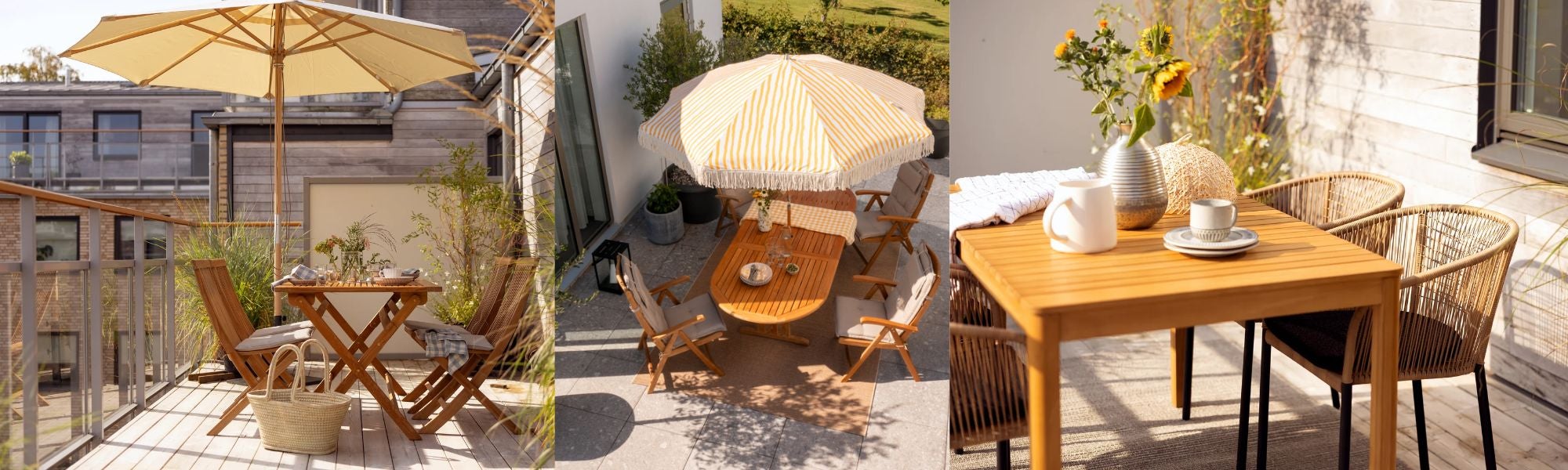
1. Start with your patio
Before choosing furniture, it helps to work out three things.
- Space. Measure the patio, terrace or balcony. Remember that you need room to walk around the furniture, not just room for the furniture itself.
- Location. How much sun and shade does the spot get, and is it exposed to wind and rain? That affects both the material and your need for sun protection.
- Use. Will the furniture mostly be used for dining, for relaxing, or a mix of both?
Rule of thumb for space: Allow at least 80 cm of free space around a dining table, so you can pull out the chairs and stand up. Where people need to walk past behind a seated person, allow 90–100 cm.
| Number of people | Rectangular dining table | Round dining table (diameter) |
|---|---|---|
| 2–4 | 120–140 x 80 cm | 90–110 cm |
| 4–6 | 140–180 x 90 cm | 120–130 cm |
| 6–8 | 180–220 x 90–100 cm | 140–150 cm |
If you have a small balcony, a bistro table with two chairs is often enough. There are many slim models, among other options under outdoor tables.
2. What will your patio be used for?
Dining set. A table and chairs for dinners and long lunches. See our outdoor tables and outdoor chairs, or ready-made groups. An extendable table is a good choice if you are usually a few people but sometimes many.
Lounge set. A sofa, armchairs and a coffee table for relaxing. See outdoor sofas. Think about whether you want a modular set that you can rearrange.
Rest and relaxation. Sun loungers and recliners for anyone who wants a place to lie back. See recliners & relax.
Small spaces. On a balcony or a small patio, a bistro table, a slim table or furniture that folds away works well.
3. Material: weather, care and feel
Outdoor furniture has to withstand sun, rain and changes in temperature. Each material has its strengths.
Teak. A naturally durable wood with a warm feel. It turns silver-grey over time. If you want to keep the light colour, treat the wood with teak oil or a protective finish.
Aluminium. Light, does not rust and is therefore easy to move and look after. It suits balconies well. Many aluminium pieces also have a powder-coated finish in a wide range of colours.
Synthetic rattan. Woven fibre, often on an aluminium frame. You get the look of rattan in a weather-resistant construction. Make sure the fibre is UV-resistant.
Steel. Stable and robust. Steel furniture needs good rust protection, for example powder coating or hot-dip galvanising.
Plastic and HPL. Easy-care, affordable materials. HPL in table tops stands up well to scratches, stains and weather.
Read more about all the options under materials.
4. Comfort: cushions and fabrics
The right cushions make a big difference to how long you want to stay seated. Look at:
- Thickness and filling. Quick-drying foam copes with moisture better than standard padding.
- Fabric. Choose a weather-resistant, UV-resistant fabric that can be washed or wiped clean.
- Fit. Measure the seat and back before you buy, especially for older furniture.
See our cushions and the guide Right cushions for maximum comfort: how to choose.
5. Colour and style
Choose a style that suits your house and garden. Natural materials such as teak give a calm, timeless feel. If you want a little more personality, choose coloured furniture. Stick to two or three colours overall, and your patio will feel calm and cohesive.
6. Protection, care and storage
With a little care, outdoor furniture lasts longer.
- Furniture covers. A furniture cover protects against rain, dirt and sun when the furniture is not in use.
- Cleaning. Wipe the furniture down a few times each season and follow the care instructions for your material. See our care advice.
- Winter. Clean, dry and store cushions indoors. The furniture can stand outside under a cover, or be stored dry if you have the space.
You can find the full range of care products under care & storage.
7. Complete your patio
Once the furniture is in place, you can add what makes the space more usable:
- Parasols and sun protection for shade during the day.
- Grills and outdoor kitchens if you like to cook outdoors.
- Lighting and textiles for the evenings.
8. Checklist before you buy
- Have I measured the patio and allowed for free space around the furniture?
- How many people normally sit, and how often do we have guests?
- How exposed is the spot to sun, rain and wind?
- Which material suits the way I use and look after furniture?
- Have I thought about cushions, sun protection and furniture covers?
- Do I have somewhere to store cushions or furniture in winter?
Frequently asked questions about outdoor furniture
Which material is the most durable for outdoor furniture?
There is no single best choice. Teak, aluminium and good-quality synthetic rattan all stand up well to the weather. What matters is that the material suits the location and that you look after it.
Can outdoor furniture stay outside all year?
Many pieces can, especially in teak, aluminium and synthetic rattan, but they are happiest under a cover in winter. Cushions should always be stored dry indoors.
How big a dining table do I need for six people?
A rectangular table of 160–180 x 90 cm seats six people. A round table should be at least 130 cm in diameter.
How much space should I allow around the table?
At least 80 cm so you can sit down and get up, and 90–100 cm if people need to walk past behind the chairs.
How do I look after teak?
Wipe it down regularly with a mild soap solution. If you want to keep the light colour, treat the wood with teak oil; otherwise it turns silver-grey over time.